Wednesday, January 29, 2014

Chrome
Chrome apps for Android and iOS get closer with new developer tools

The toolchain that
Google has released is an "early developer preview", but it should allow
developers to easily port their Chrome apps to mobile by essentially
wrapping the Chrome apps in a native shell wrapper using Apache Cordova.
And, to make apps feel more native, Google has also ported certain
Chrome APIs like push messaging, OAuth2 identification signin, storage
access, and more. Not surprisingly, there are a couple extra APIs
available for Android porting including rich notifications and in-app
payments.
Google's plan is to allow developers
to release Chrome apps through the Google Play Store and Apple App
Store and have them run just like native apps. We don't have a lot of
info on how it will all work, but we expect some cloud syncing to be
involved since these are Chrome apps after all.
source: Chromium Blog via The Verge
Apple chipset
Apple's A8 may integrate DRAM into the chipset

The
A7 SoC included the CPU, GPU, cache, image processor, and "secure
enclave" to store TouchID data, and moved the accelerometer, gyroscope,
and compass processing to the M7 motion coprocessor. Presumably, there
will be an M8 motion coprocessor, but word has it that in addition to
everything you'd find on the A7, the A8 will also include the DRAM for
the device.
The same report from DigiTimes
says that Apple has chosen Amkor Technology and STATS ChipPAC to each
package 40% of the A8 orders with Advanced Semiconductor Engineering
taking the last 20% of the packaging orders. Interestingly, the report
closes by saying that "TSMC reportedly will start ramping up production
using 20nm process technology for Apple's A8 chip in the second quarter
of 2014." The interesting thing there is that the wording doesn't say
that the A8 will begin production in Q2, but that TSMC will ramp up
production using the same 20nm process. That could just be odd wording
from DigiTimes, because it would make sense that the A8 ramps up
production in Q2 so the devices can be built in time for a late Q3
release.
source: DigiTimes
LG Nexus 5 review
Introduction
Nexus phone releases are timed to let Google have the last word - and what a way to have it! A phone that matches any flagship on specs and premieres the latest OS version, but costs barely half as much as some of them. The Nexus 5 promises a great finale to yet another exciting smartphone season and it's not only the droids that stand to attention.This could have been a deja-vu moment for everybody but the fifth gen Google phone will probably have to work harder than ever. There's already a bunch of Snapdragon-800-powered Android flagships, while Qualcomm's latest is ticking inside Windows Phone-powered devices by Nokia too and Apple has the new 64-bit A7 chipset.
On a second thought, Nexus phones have never been too keen on getting into the skirmish, keeping their distance, aloof and somewhat out of touch, nothing to prove to anyone. The best of Google on your homescreen - that's what it's all about - and at a price that's almost too good to be true.


Nexus 5 official photos
The search giant is partnering with LG for a second year in a row. Whether the Koreans are offering the best production cost or both sides were happy with the Nexus 4, it's a choice we don't mind at all. Anyway, Android 4.4 KitKat on a five-inch full-HD screen, powered by a Snapdragon 800 is a package no one would say not to.
Check out the key specs to see what we're on about.
Key features
- Quad-band GSM/GPRS/EDGE support
- Penta-band 3G with HSPA; LTE cat3
- 4.95" 16M-color 1080p True HD IPS Plus FullHD capacitive touchscreen
- Corning Gorilla Glass 3 display protection
- Android OS v4.4 KitKat
- Quad-core 2.3 GHz Krait 400 CPU, 2 GB RAM, Adreno 330 GPU, Qualcomm Snapdragon 800 chipset
- 8MP autofocus camera with LED flash, geotagging, optical image stabilization, photo sphere, 1080p video recording @ 30fps with continuous autofocus and stereo sound; HDR mode, Dual recording, optical image stabilization
- 1.3 MP front-facing camera
- 16GB/32GB of built-in storage
- microUSB port, USB host support, USB on-the-go, SlimPort TV-out
- Bluetooth v4.0
- NFC
- Wi-Fi a/b/g/n/ac, Wi-Fi Direct and DLNA
- GPS with A-GPS, GLONASS
- Standard 3.5 mm audio jack
- Voice commands
- Accelerometer and proximity sensor
- Active noise cancellation with dedicated mic
- 2300mAh Li-Po battery, wireless charging
Main disadvantages
- Non-expandable storage
- Poor video and audio codec support out of the box
- Non user-replaceable battery
- Comparatively poor battery life (except for calls)
- Loudspeaker is on the quiet side
- Limited availability at launch
Otherwise, the Nexus 5 has one of the most understated exterior designs a flagship smartphone has ever had. It's not an attention-grabber like the iPhone 5s, the HTC One or the Xperia Z1, as if wanting to underline that what matters is inside.


Google Nexus 5 live photos
The latest major release of Android as usual premieres on a new Nexus phone. The Nexus 5 runs Android 4.4 KitKat, which brings even tighter OS integration with Google services. There are a number of other improvements and hints at what's to come. But before we get to that, we'll focus on the Nexus 5's build and finish. The Android 4.4. KitKat overview will follow right after, so without further ado, see you after the break.
Samsung announces devices with 4K displays are on the way
The Mobile World Conference is fast approaching, and Samsung has some titillating news about the displays on their future devices.
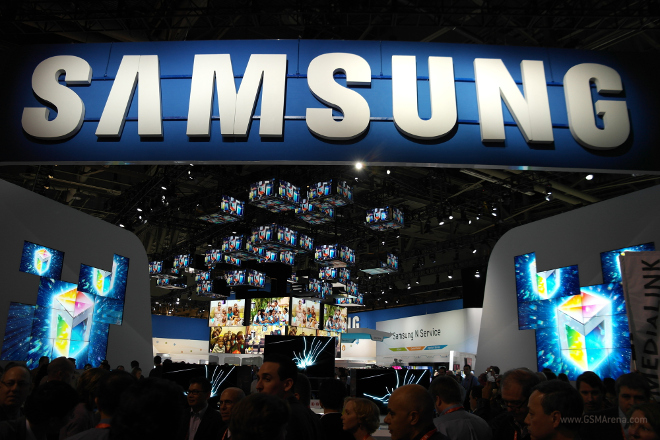
Samsung also announced that they are working on outfitting future smartphone models with UHD (4K) displays. This means that we could be seeing cell phone screens with a whopping 3480 x 2160 resolution from Uncle Sammie.
There’s no need to get too excited too quickly, however, as 4K screens are a ways off. Samsung just recently released 4K television sets, so it’s a little premature to think that this technology will be made available on their smartphones soon, but it is still an exciting promise to look forward to. Samsung will most likely reveal more information at MWC, which begins on February 24th.
In non-cell phone related news, Samsung also announced that they will be releasing AMOLED television sets with UHD SHD resolutions (7680 x 4320).
Samsung’s definitely upping their game when it comes to displays, anybody here excited to have a 4K phone?
Sony has a tablet attachment for its QX10/QX100 lens-style camera duo on the way
For those of you who find snapping photos with a tablet a tad too subtle, I have some great news! Sony has a tablet attachment for its QX10/QX100 duo of lens-style cameras coming your way.
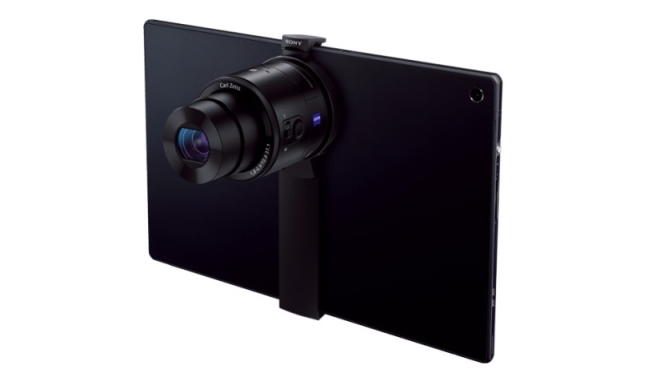
The Sony SPA-TA1 will be priced at ¥3,675 when launched (about $36) when available. Details on its availability in other markets are yet to be announced.
Introduction
Sony is the first to deliver a smartphone, which wouldn't let size get in the way of performance or screen quality. It's no accident that it's a compact rather than a mini - the Snapdragon 800-powered beast would be ashamed to share a name with the upper-midrange (at best) wannabes of the competition.We've had this for two years now - Android flagships growing in size faster than the US national debt, leaving those in search of a premium phone that doesn't need its own seat on the bus with an increasingly tougher puzzle to crack. You could either defect to iOS at the cost of a two or three month's worth of rent or live with a chipset and screen that are at least a year old.


Hard to believe? Just take a look at that spec sheet:
Key features
- Quad-band GSM/GPRS/EDGE support; 3G with 42Mbps HSPA; 150Mbps LTE
- 4.3" 16M-color 720p capacitive touchscreen Triluminos display (342pixel density); X-Reality engine; shatter proof and scratch-resistant glass
- Android OS v4.3 Jelly Bean with custom UI
- Quad-core 2.26 GHz Krait 400 CPU, 2 GB RAM, Adreno 330 GPU; Qualcomm Snapdragon 800 chipset
- 20.7MP autofocus camera with a 1/2.3" Exmor RS sensor and F/2.0 Sony G Lens; Info-eye, AR effects
- 1080p video recording @ 30fps, continuous autofocus and stereo sound; live video streaming to Facebook
- 2MP front-facing camera, 1080p video recording
- IP58 certification, dust- and waterproof
- Wi-Fi a/b/g/n/ac, Wi-Fi Direct and DLNA; Wireless TV-out
- GPS with A-GPS, GLONASS
- 16GB of built-in storage; microSD card slot
- MHL-enabled microUSB port
- Bluetooth v4.0
- NFC & ANT+ support
- FM radio with RDS
- Standard 3.5 mm audio jack
- Accelerometer and proximity sensor
- Active noise cancellation with a dedicated mic
- 2,300mAh Li-Ion battery
Main disadvantage
- Weak LED flash
- Non-user-replaceable battery
- Below average loudspeaker performance (probably due to level of waterproofing)
A smartphone barely bigger than an iPhone 5s, that's got the latest chipset available in the market, a high-res camera and a screen that, at least on paper, should provide splendid image quality. Compared to the full-size Xperia Z1, the Compact is only some screen resolution and battery juice short.
 Sony Xperia Z1 Comapct
However, when you think about it, 1080p would've been an overkill on a 4.3" screen, adding to the battery drain rather than the image quality. And with the reduced screen consumption the smaller battery shouldn't be an issue either - it's as big as what the Xperia Z offered anyway.
All in all, there's no doubt that the Sony Xperia Z1 Compact has the makings of a winner. But if it was all decided on paper, you wouldn't really be reading this - unless it's the specs you're buying. And with that kind of specs, we can understand. But anyway, let's see how the Sony Xperia Z1 Compact does in real life, shall we?
Subscribe to:
Posts (Atom)